
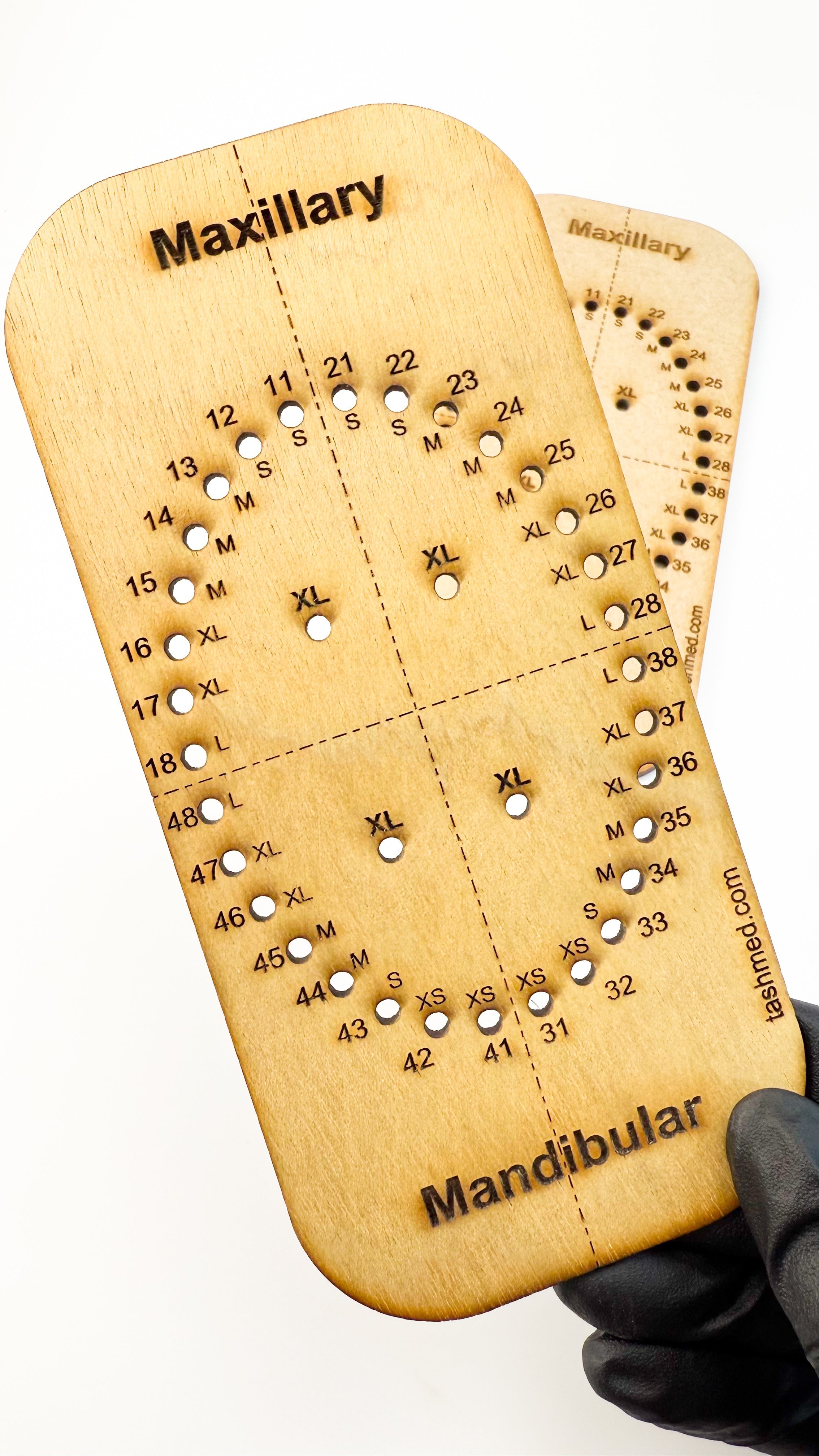
Adult and children’s dentist treatments alike require proper isolation of the operative field. This is a crucial step in making sure the environment is controlled, clean and dry for providing the most ideal foundation for endodontic procedures, teeth restorations or fixed prosthodontics. The perfect instrument to achieve this exact purpose is the rubber dam. Given its importance for preventing the risk of inhaling solutions and materials used during the dentist’s work as well as avoiding contamination, some assistance from a rubber dam template is more than welcome.
A rubber dam template simplifies marking the holes for teeth on the rubber dam due to the labeled recommendations for hole diameter featured on this device. Additionally, it includes a separate set of markings for endodontic treatments in which isolation of a single molar is required. Moreover, the preparation of a rubber dam using a template can be easily delegated to your assistant – further streamlining the procedure.
Some tips to keep in mind when using the rubber dam templates include ensuring the dryness of the rubber dam by using the template before applying the dam sheet. Also, it is important to avoid contamination of the template as wooden template is NOT autoclavable. When using a template for marking holes, drawing a hypothetical central line on the rubber dam can be helpful with proper its positioning. Further, this minimizes excess material at the back and prevents coverage of the patient’s nose. This central line is only effective if the last tooth on which you plan to place the clamp is situated at the line.
As shown, rubber dam templates are very helpful in marking the precise location of the teeth which are to be isolated and treated on the rubber dam sheet. This, in turn, affects the quality of the dental procedure – allowing for punched holes with correct positioning.